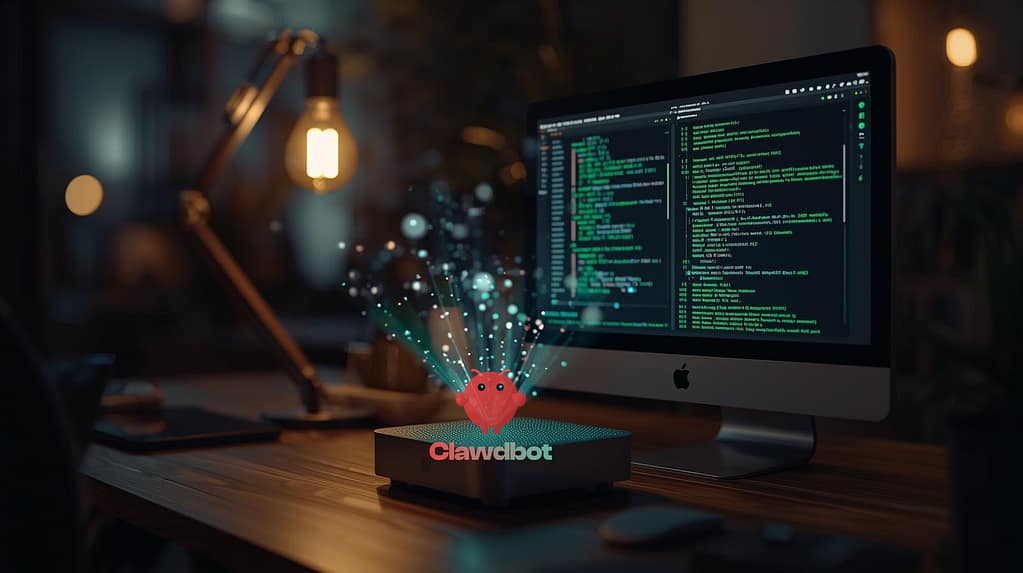
GitHub just witnessed something unprecedented. A project called Clawdbot (now Moltbot) exploded to 15,000+ stars in 72 hours. But here’s the wild part: it triggered a run on Mac Minis. Best Buy shelves emptied. Apple’s delivery estimates pushed to weeks. Developers were setting up home servers like it was 2005 again.
This isn’t about another AI chatbot. This is about the operating system finally working for us instead of us working for it. And if you’re in B2B SaaS or enterprise software, what’s happening right now will either make or break your product strategy for the next decade.
Let me show you what’s really going on.
The Viral Moment That Changed Everything
Peter Steinberger didn’t mean to break the internet. The developer behind popular iOS tools just wanted a personal AI assistant that actually did things while he slept. He built Moltbot (originally Clawdbot, until Anthropic’s trademark lawyers politely knocked), released it on GitHub, and went to bed.
He woke up to chaos.
Within 48 hours, the project was trending #1 on GitHub. Developer communities exploded with demos. People were showing Moltbot autonomously debugging code, managing their calendars, monitoring servers, and responding to emails. Not with prompts. Not with supervision. Just… doing it.
The reaction wasn’t “cool demo.” It was “I need this now.” And that meant buying hardware.
Because here’s the thing about Moltbot that makes it different from every AI assistant you’ve used: it needs to run 24/7 on dedicated hardware you control. Your laptop won’t cut it. Cloud hosting defeats the purpose. You need an always-on personal server.
Enter the Mac Mini gold rush.
Why the Mac Mini Became the Most Important Hardware of 2025
Developers started posting their setups. Small, silent Mac Minis sitting in home offices, running continuously, acting as personal AI infrastructure. The cost? $600. The value? Potentially infinite.
Think about what we’ve normalized: we pay $20-200/month for AI subscriptions. ChatGPT Plus, Claude Pro, Copilot, multiple services stacking up. Over two years, that’s $480-$4,800 sent to cloud providers, with zero control over your data, zero ability to customize behavior, and zero guarantee the service won’t change its terms tomorrow.
A Mac Mini is a one-time investment. You own it. Your data never leaves your network. You can run any AI model, any agent framework, any custom workflow you want. And critically: it’s always on, always learning, always working.
But there’s a deeper reason the Mac Mini became the hardware of choice beyond economics: sandbox security.
Moltbot isn’t just reading your files. It has terminal access. It can execute commands, modify systems, interact with APIs. Would you give an AI agent unrestricted access to your primary work machine? The one with client data, financial records, proprietary code?
The Mac Mini architecture solves this elegantly. You set up a dedicated machine that the agent controls completely, isolated from your critical systems but connected to your network. If something goes wrong, your main computer is untouched. If you want to experiment with dangerous permissions, you have a safe playground.
This is the birth of Personal AI Infrastructure. Just like we adopted dedicated servers for Plex, home automation, or NAS systems, we’re now adopting dedicated hardware for AI agents. And once you understand why, you realize we’re never going back.
From Operating System to Agentic OS: The Fundamental Shift
Let’s talk about what “Agentic OS” actually means, because this term is going to dominate tech discourse for the next five years.
Your current OS—macOS, Windows, Linux—is fundamentally reactive. You open an app. You click a button. You tell the computer what to do, and it does it. This model hasn’t changed since the 1980s. We got prettier interfaces, faster processors, touch screens, voice commands. But the relationship stayed the same: human commands, computer obeys.
Agentic AI flips this entirely. Now the OS has agency. It observes your patterns, understands your goals, and takes action without being asked. You don’t open your calendar app and schedule a meeting. You mention in Slack that you need to meet with Sarah next week, and your Agentic OS notices, checks both calendars, finds a slot, sends the invite, and adds it to your task list. You never touched a calendar app.
This is what Moltbot represents. Not an assistant you summon, but a digital operating layer that’s always working on your behalf.
The technical term is “Agent as a Service” (AaaS), but I think that undersells it. This isn’t a service—it’s a fundamental rethinking of what computers are for. We’ve spent 40 years training humans to think like computers. File systems. Directory structures. Application launchers. We adapted to the machine.
Agentic OS means the machine finally adapts to us.
You stop managing tools and start stating outcomes. “Keep my project documentation up to date.” “Monitor competitors and flag strategic shifts.” “Optimize my meeting schedule for deep work blocks.” The agent figures out how. You focus on what and why.
This is the future Peter Steinberger accidentally triggered when Moltbot went viral. And it’s why enterprise software companies are quietly panicking.
The SaaS Reckoning: When Agents Become Your Users
If you’re building B2B SaaS, your product strategy is about to become obsolete.
Most enterprise software is designed for humans navigating graphical interfaces. Dropdown menus, dashboards, multi-step workflows. This made sense when humans were the only users. But what happens when your customer’s AI agent is the primary user?
Agents don’t care about beautiful UI. They need programmatic access to every function. If you don’t provide it, they’ll route around you to a competitor that does.
Example: A marketing director tells her Moltbot agent: “Monitor all campaigns. If CAC exceeds $50, reduce spend by 20% and notify me.” If your platform requires logging in and clicking through five screens, her agent can’t help. If your competitor has a comprehensive API, that’s where the agent goes.
The new competitive moat isn’t features. It’s agent-compatibility.
What This Means for Enterprise Software
The Moltbot phenomenon confirms what the data shows: we’re entering the Agent-First Era. Enterprise software companies need to fundamentally rethink their roadmaps:
API-First becomes Agent-First. Every feature needs programmatic access. Your API documentation is now your primary user interface.
Semantic Memory is the New Moat. Products that remember context and learn preferences become exponentially more valuable. Agents need products that understand, not just respond.
Local Deployment Wins. Companies won’t send proprietary data to cloud APIs. On-premise capability shifts from “enterprise requirement” to “table stakes.”
Proactive Integration Over Reactive Features. Users want systems that monitor and act autonomously. Webhooks and event-driven architecture become critical.
The companies recognizing this early will build the next generation of business tools. Those that don’t will watch agents route around their feature-rich platforms to simpler, more programmable alternatives.
The Privacy Revolution Nobody’s Talking About
When you use ChatGPT or Claude, your data leaves your infrastructure. Moltbot changes this completely. Everything runs locally. Your conversations, data, and agent memory never leave your network. For enterprises dealing with GDPR, HIPAA, or proprietary information, this isn’t just preferable—it’s potentially the only compliant option.
You own the hardware. You control the data. You decide what the agent accesses. This is the return of computing autonomy. And once companies experience it, they won’t go back to dependency on cloud AI providers.
What Happens Next
Right now, Moltbot requires technical setup. But that’s how every platform shift begins. Git was for developers; now it powers every modern workflow. Docker was for DevOps; now it’s how applications deploy.
Moltbot is at the “Git in 2008” stage. Early, technical, powerful—and about to go mainstream.
We’ll see an explosion of agent frameworks and consumer-friendly versions. Email clients become agent-managed processors. Project management tools become autonomous coordinators. CRM systems become self-updating databases. The applications don’t disappear—they become substrates that agents orchestrate.
For B2B SaaS, the question isn’t “should we support agents?” It’s “are we building infrastructure agents want to use, or legacy systems they’ll route around?”
The Operating System Revolution Is Here
The Moltbot viral moment isn’t about a single project. It’s about a fundamental shift in what we expect computers to do.
For 40 years, we’ve been the operating system. We managed files, launched apps, coordinated workflows. The computer was powerful but inert without our direction.
Agentic OS means the computer becomes the operator. We state goals, the system executes. We provide context, the agent maintains memory. We express intent, the infrastructure handles implementation.
This is what developers sensed when they panic-bought Mac Minis. Not hype. Recognition that the rules just changed.
If you’re building B2B or enterprise software, you have maybe 18 months before agent-compatibility becomes expected. Companies moving now are redesigning APIs and building for a world where human users are represented by AI proxies.
Companies waiting will learn what happened to desktop software in the mobile era, or to on-premise vendors when cloud SaaS emerged.
The Agentic OS era has begun. Your operating system is about to work for you instead of the other way around.
The only question: will your product be part of that future, or a footnote about what used to matter?